Haz clic aquí para leer esta publicación en español.
Dear friends, I’m grateful you’ve been receiving these reflections through WordPress. I’ve also begun sharing them on Substack, where they arrive like letters in your inbox and where we can gather in conversation. If you’d like to join me there, you can subscribe here for free: Rev Joan M Kistler’s Reflections
Costa Rica chose a path without an army, trusting instead in covenant with its people and its land. Since 1948, freedom here has not been militarized, but lived through education, health, and community. Neutrality is defended not with bases or bombs, but with trust in peace and care for creation.
In the United States, freedom has been commodified. Wars are justified in its name, slogans are sold as truth, and contracts are signed to profit from destruction. Freedom itself is packaged as a product — marketed as liberation, delivered as exploitation.
The popular saying “Freedom isn’t free” reveals the contrast. In the U.S., it is used to sanctify military sacrifice, justify endless wars, and normalize billions spent on weapons. Freedom is treated as something purchased with bombs and blood. In Costa Rica, the same truth is lived differently: freedom isn’t free because it requires covenant — the daily choice to invest in schools instead of soldiers, hospitals instead of bases, and care instead of conquest.
Today, the Iran war shows how the U.S. slogan becomes a license for destruction. Bombs fall on cities, oil markets collapse, and families are displaced — all justified in the name of freedom. The assassination of leaders and the struggle over the Strait of Hormuz reveal how freedom is commodified: turned into contracts, fuel tolls, and geopolitical profit. The true cost is paid not by those who profit, but by ordinary people who lose homes, livelihoods, and loved ones.
The Venezuela intervention offered another example. The people there longed to be free from oppression and exploitation under a corrupt leader. They were deceived with promises of a better life, only to be exploited even more.
The true cost of commodified freedom is staggering: billions spent on bombs while healthcare, housing, and food are neglected; lives lost, families displaced, land exploited. Freedom becomes a slogan that erodes covenantal purpose.
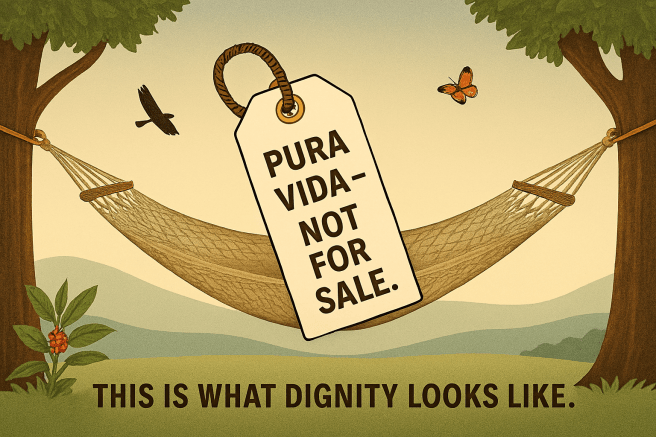
Costa Rica reminds us that freedom is not for sale. It is lived through neutrality, conservation, and community trust. Schools, hospitals, and community support are the fruits of a freedom rooted in dignity. Neutrality here is not weakness — it is strength, a refusal to exploit others in the name of power.
Freedom’s true cost is not war. It is covenant. It is the daily work of protecting dignity together — safeguarding peace, conserving creation, and building trust in community.
This is what dignity looks like.
⬅️ Previous Post: Guardians of Pura Vida
Pura Vida—No Se Vende: El Verdadero Costo de la Libertad

Queridos amigos, agradezco que hayan estado recibiendo estas reflexiones por WordPress. Ahora también las comparto en Substack, donde llegan como cartas a su bandeja de entrada y donde podemos reunirnos en conversación. Si desean acompañarme allí, pueden suscribirse aquí gratis: Reverend Joan M Kistler’s Reflections
Costa Rica eligió un camino sin ejército, confiando en el pacto con su gente y con su tierra. Desde 1948, la libertad aquí no se ha militarizado, sino que se vive a través de la educación, la salud y la comunidad. La neutralidad se defiende no con bases ni bombas, sino con confianza en la paz y cuidado de la creación.
En Estados Unidos, la libertad ha sido convertida en mercancía. Se justifican guerras en su nombre, se venden consignas como verdades y se firman contratos para lucrar con la destrucción. La libertad misma se empaqueta como producto: se promociona como liberación, pero se entrega como explotación.
El dicho popular “La libertad no es gratis” revela el contraste. En EE. UU. se usa para santificar el sacrificio militar, justificar guerras interminables y normalizar miles de millones gastados en armas. La libertad se trata como algo comprado con bombas y sangre. En Costa Rica, esa misma verdad se vive de otra manera: la libertad no es gratis porque requiere pacto — la elección diaria de invertir en escuelas en lugar de soldados, hospitales en lugar de bases, y cuidado en lugar de conquista.
Hoy, la guerra en Irán muestra cómo ese lema estadounidense se convierte en licencia para la destrucción. Caen bombas sobre ciudades, colapsan los mercados de petróleo y familias son desplazadas — todo justificado en nombre de la libertad. El asesinato de líderes y la disputa por el estrecho de Ormuz revelan cómo la libertad se convierte en mercancía: transformada en contratos, peajes de combustible y ganancias geopolíticas. El verdadero costo lo pagan no quienes lucran, sino la gente común que pierde hogares, medios de vida y seres queridos.
La intervención en Venezuela ofreció otro ejemplo. El pueblo allí anhelaba liberarse de la opresión y explotación bajo un líder corrupto. Se les engañó con promesas de una vida mejor, y fueron explotados aún más.
El verdadero costo de la libertad convertida en mercancía es abrumador: miles de millones gastados en bombas mientras se descuidan la salud, la vivienda y la alimentación; vidas perdidas, familias desplazadas, tierras explotadas. La libertad se convierte en un eslogan que erosiona el propósito pactado.
Costa Rica nos recuerda que la libertad no está a la venta. Se vive a través de la neutralidad, la conservación y la confianza comunitaria. Las escuelas, los hospitales y el apoyo comunitario son los frutos de una libertad arraigada en la dignidad. La neutralidad aquí no es debilidad — es fuerza, una negativa a explotar a otros en nombre del poder.
El verdadero costo de la libertad no es la guerra. Es el pacto. Es el trabajo diario de proteger la dignidad juntos — de salvaguardar la paz, conservar la creación y construir confianza en la comunidad.
Esto es lo que parece la dignidad.
⬅️ Publicación anterior: Guardianes de la Pura Vida